
Geneva – Switzerland
September 16, 2026
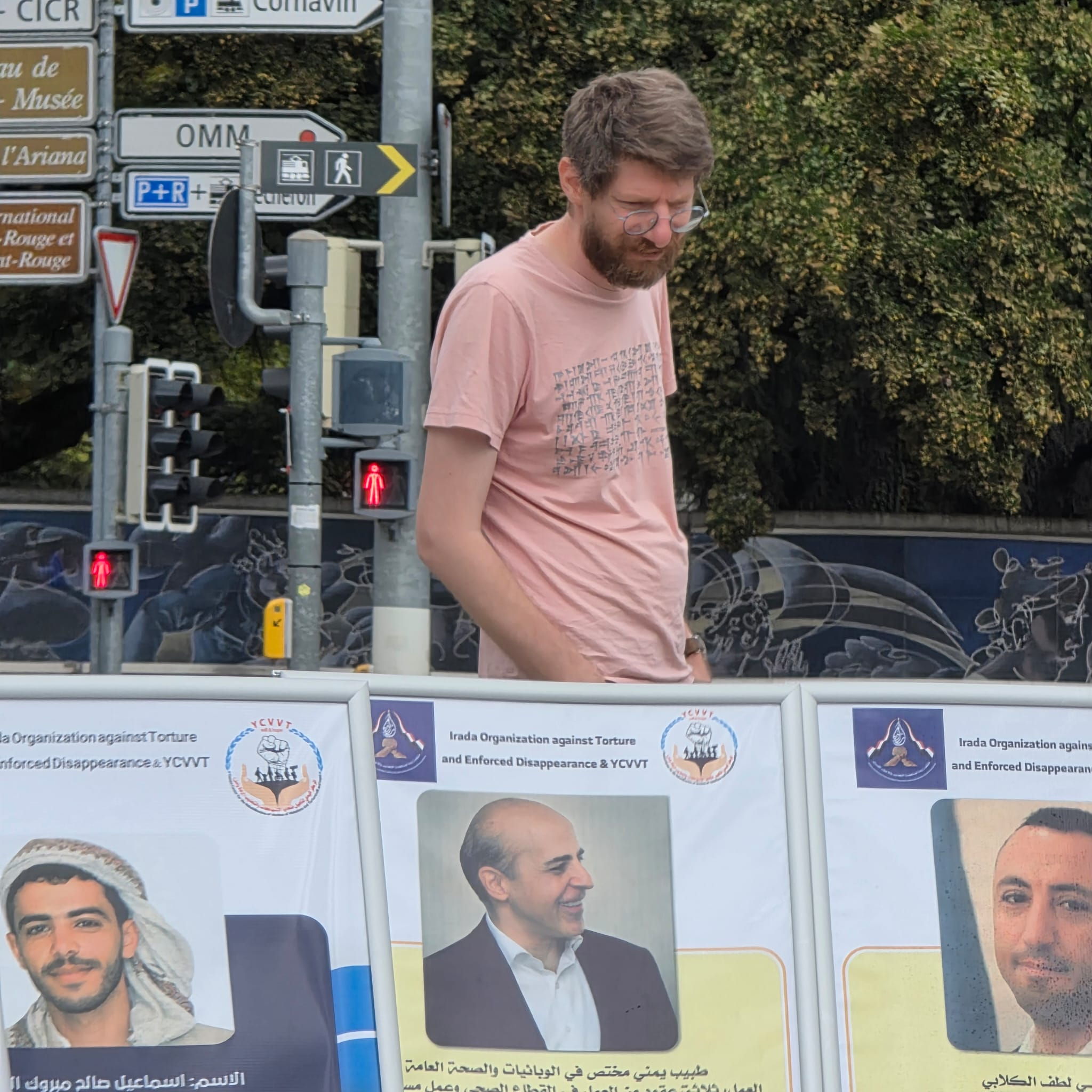
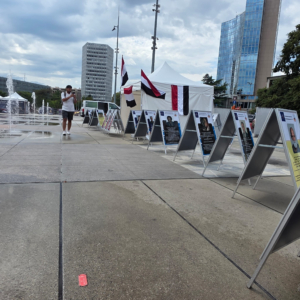
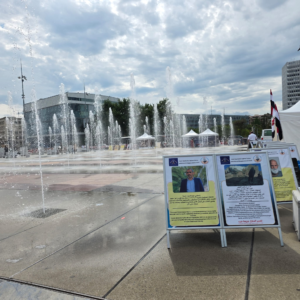
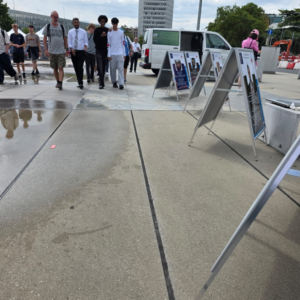
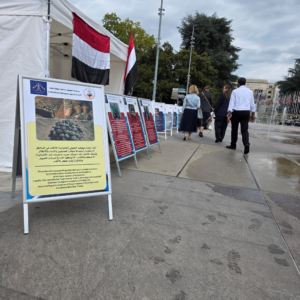
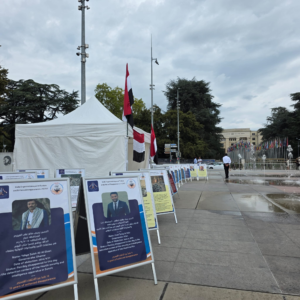
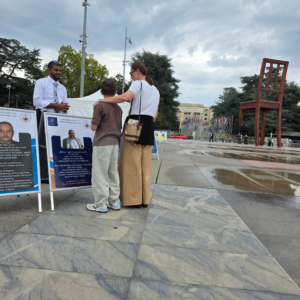
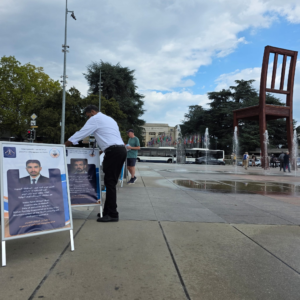
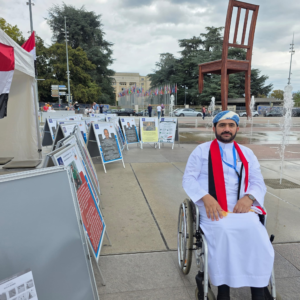
In a human rights step aimed at bringing the voices of Yemeni victims to the international community, the Erada Organization for Combating Torture and Enforced Disappearance, in cooperation with the Yemeni Center for the Rehabilitation of Victims of Violations and Torture, held a photo exhibition on Wednesday, September 16, 2026, at the United Nations Plaza in Geneva, in front of the “Broken Chair” monument, to document aspects of the violations suffered by civilians in Yemen, according to the documentary materials presented by the organizers.
The exhibition was organized in one of the most iconic symbolic sites associated with the issues of victims of violence, landmines, and anti-torture, in an effort to convey victims’ testimonies and suffering directly to the international community, and to draw the attention of visitors and human rights advocates to the ongoing humanitarian consequences of the conflict in Yemen.
Photos Documenting Civilian Suffering:
The exhibition included a large number of photos and printed A1-sized documentary materials dealing with cases and violations against Yemeni civilians at the hands of the terrorist Houthi militia.
The materials were displayed in both Arabic and English, allowing visitors of various nationalities and backgrounds to view the cases and human rights files covered by the exhibition. The exhibition focused on six main files:
-
First: Victims of Enforced Disappearance (Men and Women):
The displayed photos documented cases of individuals subjected to enforced disappearance whose fate remains unknown to this day, languishing in secret Houthi detention centers. These include Yahya Saleh Al-Aizari, Fawzi Obaid, Imad Al-Talbi, Ismail Al-Ramadi, Ali Ahmed Fallat, Ahmed Mohammed Al-Zaakari, female abductee Fatima Al-Arouli, and hundreds of forcibly disappeared persons held by the Houthi Security and Intelligence Apparatus.
The exhibition highlighted the suffering endured by the families of the disappeared in the absence of information regarding their whereabouts and fate, and the extended humanitarian, psychological, and social impacts resulting from this.
-
Second: Victims of Torture and Ill-Treatment:
The exhibition reviewed cases of victims who were tortured to death, such as abductees Masoud Al-Bakeeli, Sabri Al-Hakimi, Mohammed Khammash, Mohammed Al-Naseem, Mohammed Tufyan, and others.
The materials also addressed the physical and psychological scars left by practices of torture and cruel ill-treatment on detainees and their families, and what these practices represent as grave violations of basic human rights.
-
Third: Victims of Landmines:
The exhibition dedicated space to documenting mine victims, highlighting the ongoing threat that landmines and explosive remnants of war pose to civilian lives in Yemen.
The displayed materials covered cases of disability, as well as the impact landmines leave on the lives of families and local communities, particularly in residential areas, agricultural lands, and civilian corridors, such as victim Abdulwahid Wafi.
-
Fourth: Child Victims:
The exhibition touched upon violations suffered by children at the hands of Houthi militia elements, including cases of abduction and detention of underage children, such as the child Mohammed Al-Mashdali, the child Hussein Al-Barq, and the child Mohammed Al-Tayyabi. These children have been detained for years, with some detentions exceeding seven years.
The exhibition shed light on the humanitarian, psychological, and social impacts that children may suffer as a result of abduction and detention, attempting to highlight the magnitude of suffering that has affected one of the most vulnerable groups in Yemeni society.
-
Fifth: House Demolitions and Property Destruction:
The photos presented cases documenting the blowing up and destruction of houses in several Yemeni governorates, resulting in families losing their homes and property.
The materials also highlighted the humanitarian and social impacts of these practices, including displacement and the loss of sources of stability and livelihood, accompanied by additional burdens placed on affected families.
-
Sixth: Mine Planting and Demining Efforts:
The exhibition also addressed the issue of landmine planting and its long-term risks to civilians, alongside humanitarian efforts aimed at removing landmines and dealing with their impacts.
The materials provided by the organizers indicated that the Houthi militia planted vast numbers of landmines in various regions of Yemen, estimated at more than one million landmines, considering that these mines constitute a continuous threat to civilians.
The exhibition highlighted efforts exerted to clear mines, foremost among them the Saudi MASAM project, which has cleared more than half a million landmines, and what mine clearance operations entail in terms of saving lives, protecting civilians, and reopening affected roads and areas to residents.
The organizers emphasized that the majority of mine victims are civilians, including women and children, and that the impact of mines is not limited to injuries, deaths, and disabilities, but extends to disrupting livelihoods, movement, and access to agricultural lands and basic services.
Direct Explanations to Visitors:
-
Sheikh Jamal Al-Maamari, President of the Erada Organization for Combating Torture and Enforced Disappearance and President of the Yemeni Center for the Rehabilitation of Victims of Violations and Torture, personally explained the contents of the exhibition to visitors, reviewing the backgrounds of several displayed cases, the nature of the violations covered by the documentary materials, and the impacts left on victims and their families.
-
Dr. Mujeeb, Public Relations Officer at Erada Organization, provided detailed explanations to visitors regarding the human rights and humanitarian files covered in the exhibition, discussing aspects of the suffering of Yemeni civilians and the humanitarian and social repercussions resulting from the documented violations.
A Message from Victims to the International Community:
The exhibition was not limited to displaying photos; it sought to transform individual cases into living testimonies reminding the international community that the effects of violations do not end with the occurrence itself, but extend to the families of victims and local communities for many long years.
Holding the exhibition at the United Nations Plaza in Geneva aimed to provide victims with a platform to convey their voices to international institutions, diplomatic missions, and human rights organizations, emphasizing the need to place civilian protection and accountability for perpetrators at the top of priorities when dealing with the Yemeni file.
Human Rights Demands:
In light of the files addressed in the exhibition, the organizing entities renewed their call for taking human rights and legal steps, most notably:
-
Reveal the fate of all forcibly disappeared persons, enabling their families to know their whereabouts and destiny.
-
Stop all forms of torture and cruel ill-treatment, and conduct serious investigations into related allegations.
-
Protect civilians from the hazards of landmines and explosive remnants of war.
-
Enhance demining programs and awareness of their dangers, provide support and care for victims, and emphasize that planting landmines randomly in civilian areas is a grave war crime under International Humanitarian Law and relevant international laws.
-
Protect children from abduction, detention, and all other conflict-related violations.
-
Protect homes and civilian property, respecting the rules of International Humanitarian Law.
-
Provide medical and psychological care, as well as rehabilitation programs for victims, survivors, and their families.
-
Conduct independent and transparent investigations into documented violations, legally prosecute perpetrators, and ensure the preservation of related evidence.
-
Guarantee accountability, reparation, and redress for victims in accordance with international legal standards.
The exhibition concluded its message by affirming that documenting violations represents an essential step in preserving the memory of victims, confronting impunity, and keeping the suffering of Yemeni civilians present before the international community until justice is achieved and victims are redressed.
Watch:
https://youtu.be/5j-CkUZPTLw?si=Xl9-xVwJSlBxvg5o
You may also like
President of the Erada Organization Calls on the Human Rights Council to Prioritize Yemen File and End Houthi Violations
The President of the Erada Organization and the Yemeni Center for the Rehabilitation of Victims of Violations and Torture called on the…
In Cooperation with the Yemeni Center, Erada Organization Discusses Human Rights Violations and Recent Developments in Yemen with the British Mission
Geneva – Switzerland – September 23, 2026 Erada Organization for Combating Torture and Enforced Disappearance held a meeting at the Palace of…
In Cooperation with the Yemeni Center, Erada Organization Discusses Human Rights Developments in Yemen with the Permanent Mission of Switzerland
Geneva – Switzerland – September 22, 2026 The President of the Erada Organization for Combating Torture and Enforced Disappearance and President of…
In Cooperation with the Yemeni Center, Erada Discusses Human Rights Developments in Yemen with the U.S. Mission in Geneva
Geneva – Switzerland – September 21, 2026 The President of the Yemeni Center for the Rehabilitation of Victims of Violations and Torture…
Closed Discussion Seminar at the Palais des Nations in Geneva Addresses the Situation of Violations in Yemen
Geneva – September 18, 2026 A closed panel discussion was held at the Palais des Nations in Geneva, in Conference Room TEMPUS…
Erada Organization Meets with the High Commission – Geneva
63rd Session of the Human Rights Council As part of its ongoing activities, the “Erada Organization for Combating Torture and Enforced Disappearance”,…